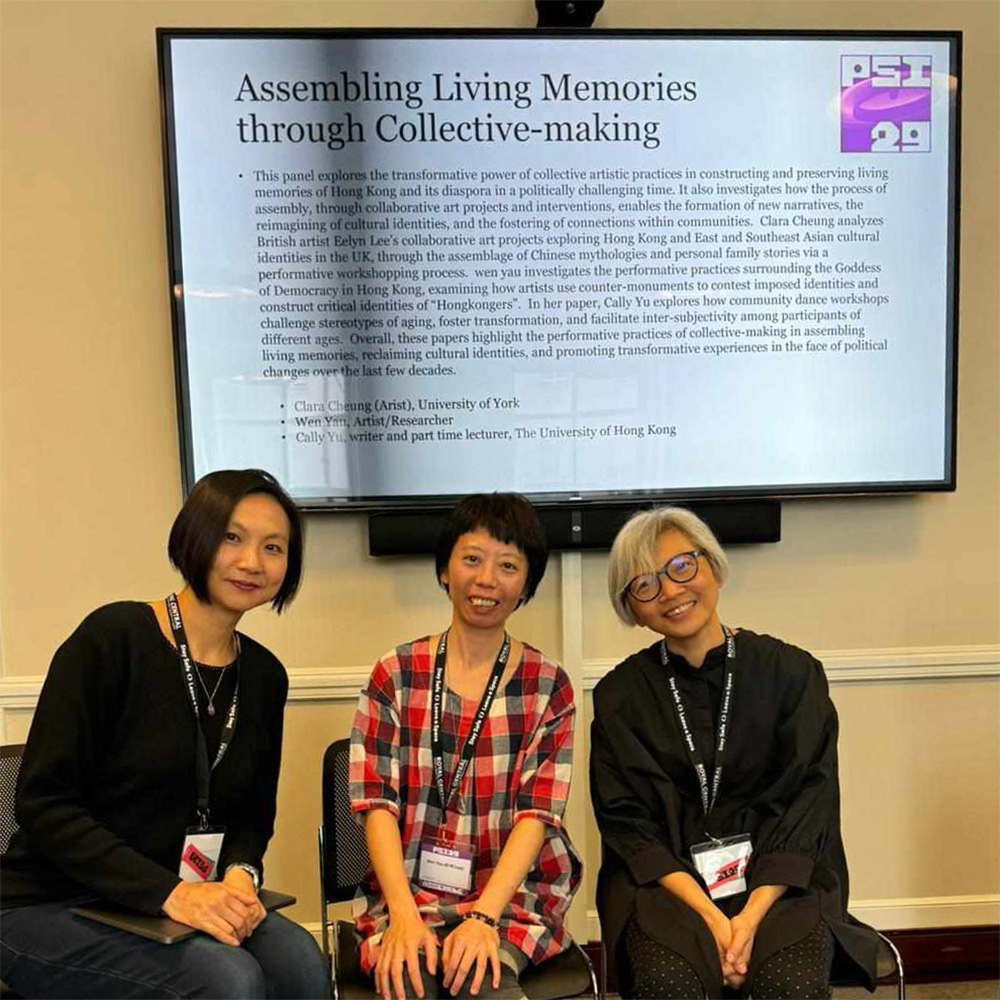
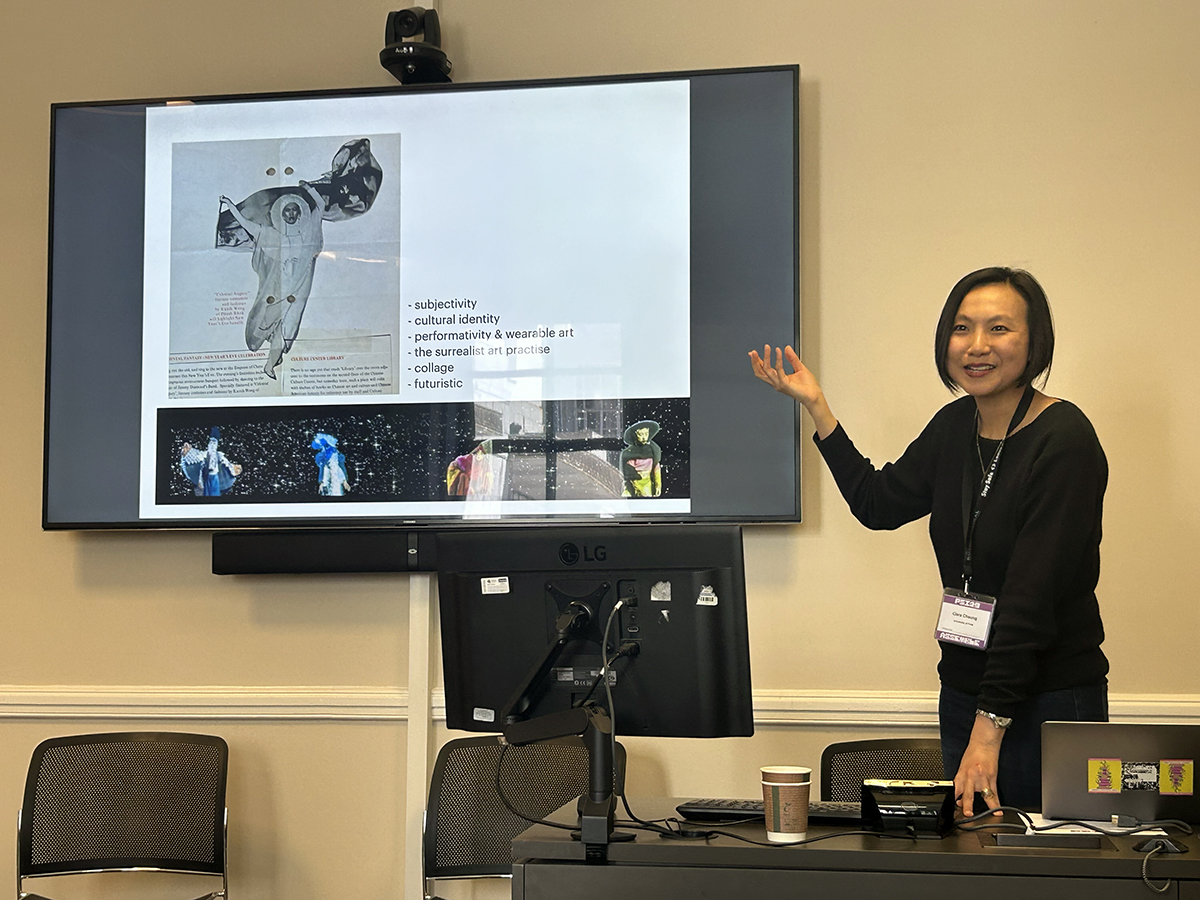
I convened the panel “Assembling Living Memories through Collective-making” in the 29th Performance Studies International (PSi#29) — Assemble! conference at the University of London.
The panel explores the transformative power of collective artistic practices in constructing and preserving living memories of Hong Kong and its diaspora in a politically challenging time. It also investigates how the process of assembly, through collaborative art projects and interventions, enables the formation of new narratives, the reimagining of cultural identities, and the fostering of connections within communities. Clara Cheung analyzes British artist Eelyn Lee’s collaborative art projects exploring Hong Kong and East and Southeast Asian cultural identities in the UK, through the assemblage of Chinese mythologies and personal family stories via a performative workshopping process. wen yau investigates the performative practices surrounding the Goddess of Democracy in Hong Kong, examining how artists use counter-monuments to contest imposed identities and construct critical identities of “Hongkongers”. In her paper, Cally Yu explores how community dance workshops challenge stereotypes of aging, foster transformation, and facilitate inter-subjectivity among participants of different ages. Overall, these papers highlight the performative practices of collective-making in assembling living memories, reclaiming cultural identities, and promoting transformative experiences in the face of political changes over the last few decades.
Panel Papers include:
- Performing the tale of Lo Ting, in the encounter with the emergence of ESEA identity in Britain
Clara CHEUNG (PhD candidate, History of Art Department, University of York) - Performative (Count-)monument as a means of Resembling Critical Identities
wen yau (independent artist/researcher) - Embodied experiences, Transformation, Transindividuation and Aging
Cally Yeuk Mui YU (independent writer)
In my paper “Performative (Count-)monument as a means of Resembling Critical Identities”, I look at how Hongkongers’’ identities are performed in an ongoing process of monumentalizing the Goddess of Democracy in Hong Kong from 1989 to the present. The sculpture first appeared as a protest object during the 1989 Beijing Tiananmen Square Movement and was destroyed during the crackdown. After then, a group of artists in Hong Kong recreated the sculpture, and the campaign organiser used it to present a political cause of continuing the movement’s pursuit of a more democratic China. Over the next two decades, the sculpture evolved from a monumental image commemorating the victims of the crackdown in the annual vigils to miniature merchandises sold in the new year market and a variant sculpture created by a Chinese diaspora artist installed on a university campus.
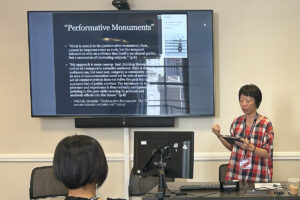 With reference to Mechtild Widrich’s notion of performative monuments, I investigate the performative practices surrounding the Goddess of Democracy and its variants in the past 3 decades. For example, in regular commemoration assemblies, for example, the public participated in collective actions such as laying flowers, chanting slogans, mourning the victims with candlelight, and taking photos as a promise to pass on the memories and continue the pursuit of a more democratic China; students and alumni escorted a new sculpture as it was transported to the university campus, demonstrating a strong sense of belonging and solidarity. Meanwhile, there were art events that resembled counter-monuments by reflecting on the monumentality of the sculpture and its images. Some artists created sculptural work inspired by the Goddess of Democracy; others lay flowers every year in another public art sculpture in town created by a French artist based on hearsay stories that it was created in memory of the 1989 Beijing movement, and some younger artists have been rallying on bicycles from this public art sculpture to the annual vigil, among other things.
To conclude, I suggest that the artists’ performative (counter-)monuments presented a critical and alternative perspective of “Hongkonger” identities by contesting the Chinese-Hongkonger identity imposed not only by the regime but also by the main organiser of the 1989 crackdown commemoration. While attempting to assemble memories of a politically repressed event in history and resemble local histories in the process of monumentalisation, the critical identities of “Hongkongers”are constructed and reconstructed amid the political changes along the colonial and post/trans-colonial times.
 This panel is part of the PSi#29 — Assemble! hosted by The Royal Central School of Speech and Drama, University of London, in collaboration with LIFT (London International Theatre Festival), in partnership with the University of London’s Birkbeck, Royal Holloway, and School of Advanced Studies, 20-23/06/2024.
(all photos by Evelyn Wan, unless specified.)